CITY
Where the Heat Ends: The Atlantic Coast from Marrakech
Three hours west of the city, the ocean rewrites both the temperature and the mood. Where to go when the plain overheats, and when each town earns the road.
Timence Guide Editors · 29 June 2026
By late July the plain around Marrakech sits at around forty degrees, and in the worst heatwaves it pushes past forty-five. The city has its own intelligence about this: thick walls, shaded courtyards, the long midday pause. But there is a simpler answer, and people here have always known it. You drive. The Atlantic coast from Marrakech is close enough to be a reflex rather than an expedition, under three hours of road, and at the end of it the air comes off the ocean at twenty-two to twenty-five degrees. The difference is not incremental. It is a different climate, reached before lunch.
What makes the coast work as a reset is the wind. The same Atlantic trade winds the inland plain never feels run steadily down this stretch of shore, and they do the cooling that no riad courtyard can manage. The drive stages the change for you: the red of the Haouz gives way to argan scrub, then to a flat grey light that means the sea is close. You feel the temperature drop through the car window before you see the water.
The coast is not one place, though, and choosing the wrong stretch wastes the day. Each town answers a different question.
Essaouira
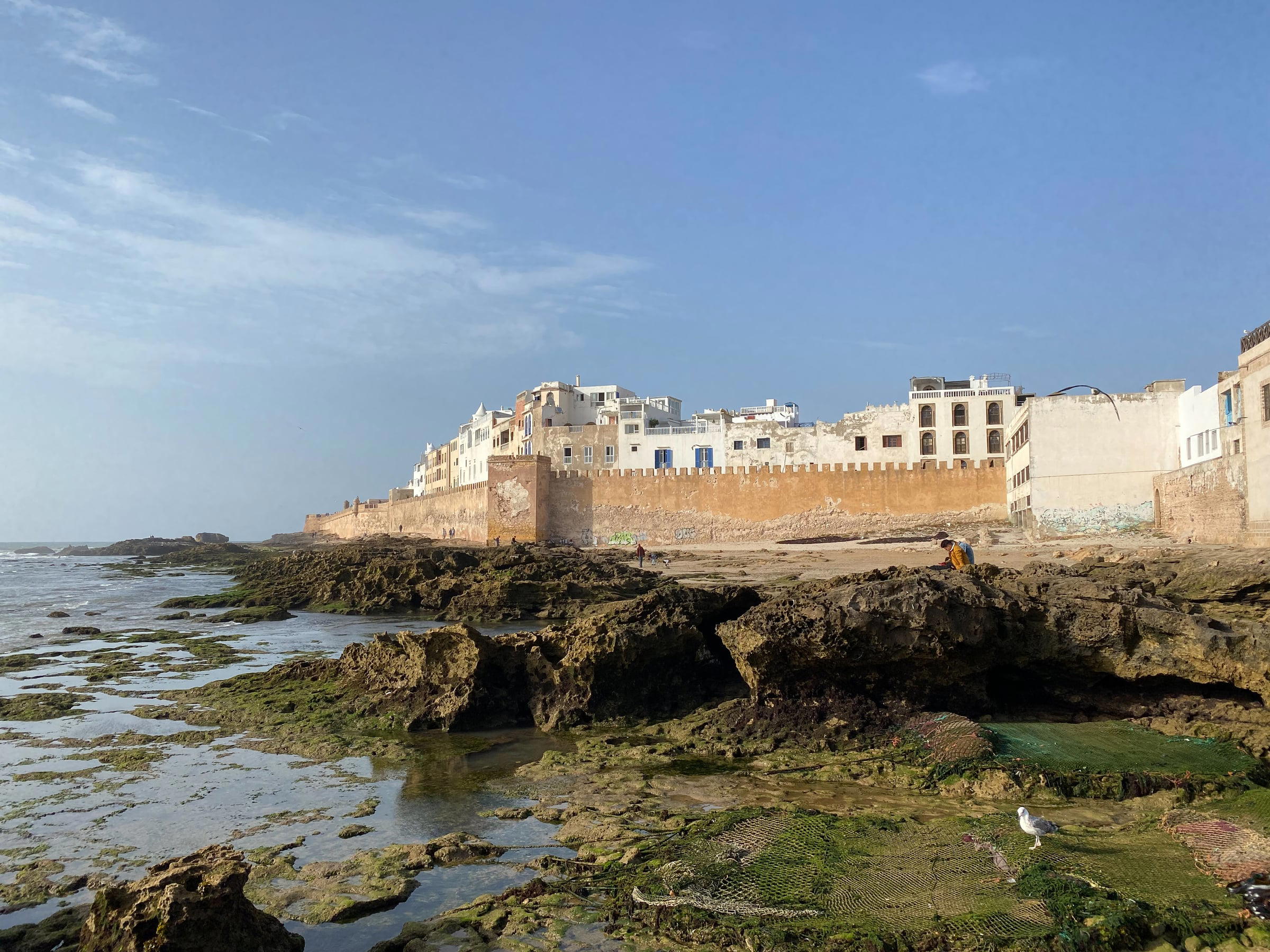
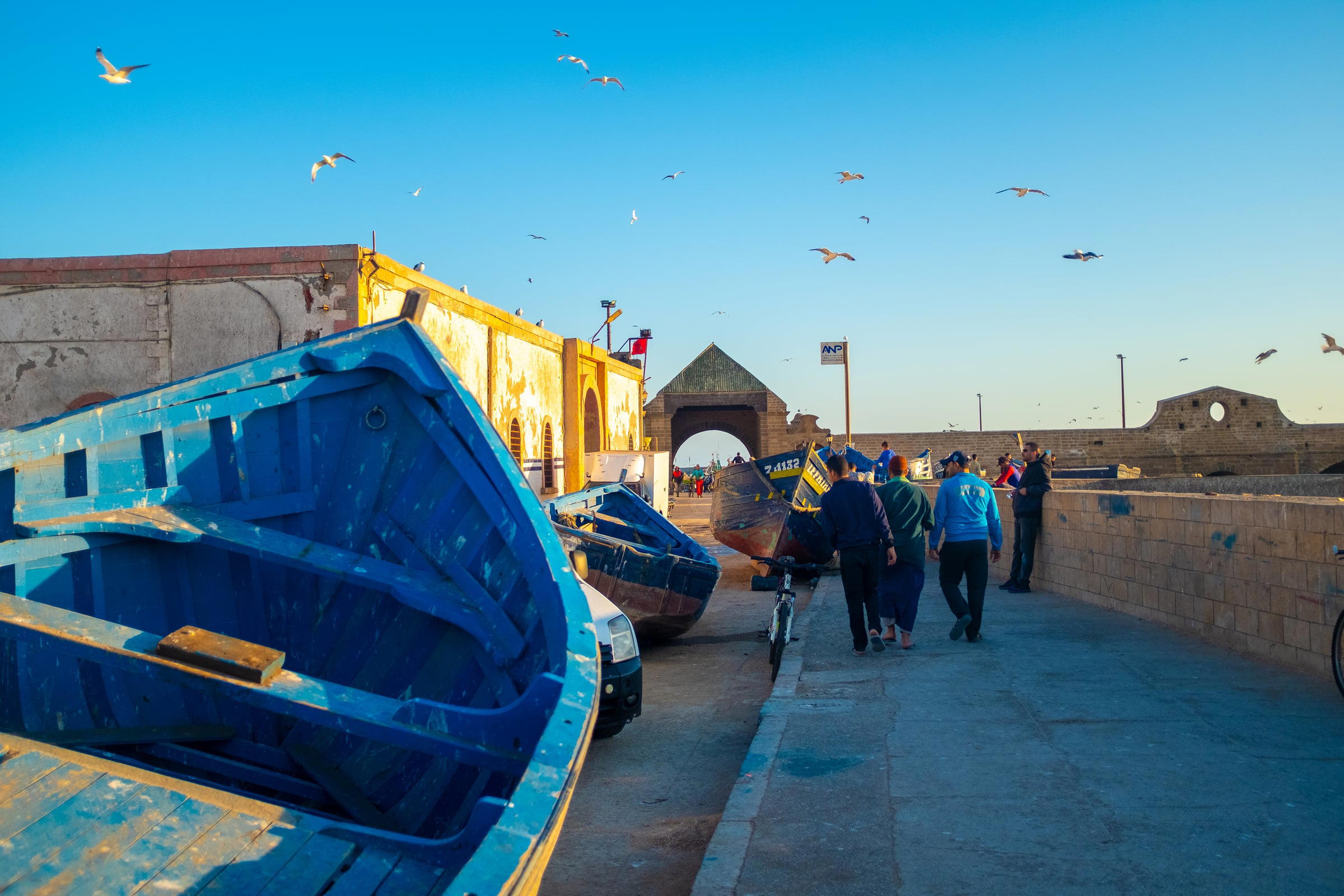
Essaouira is the one most people mean when they say the coast, and for once the consensus is right. It is a walled town on a rocky point, its medina a UNESCO site since 2001, laid out in the mid-eighteenth century along straight lines that feel almost European. The sultan of the day hired a French engineer, and the ramparts still follow the geometry of Vauban. The result is a medina you can actually read. After the beautiful confusion of Marrakech, that legibility is part of the relief.
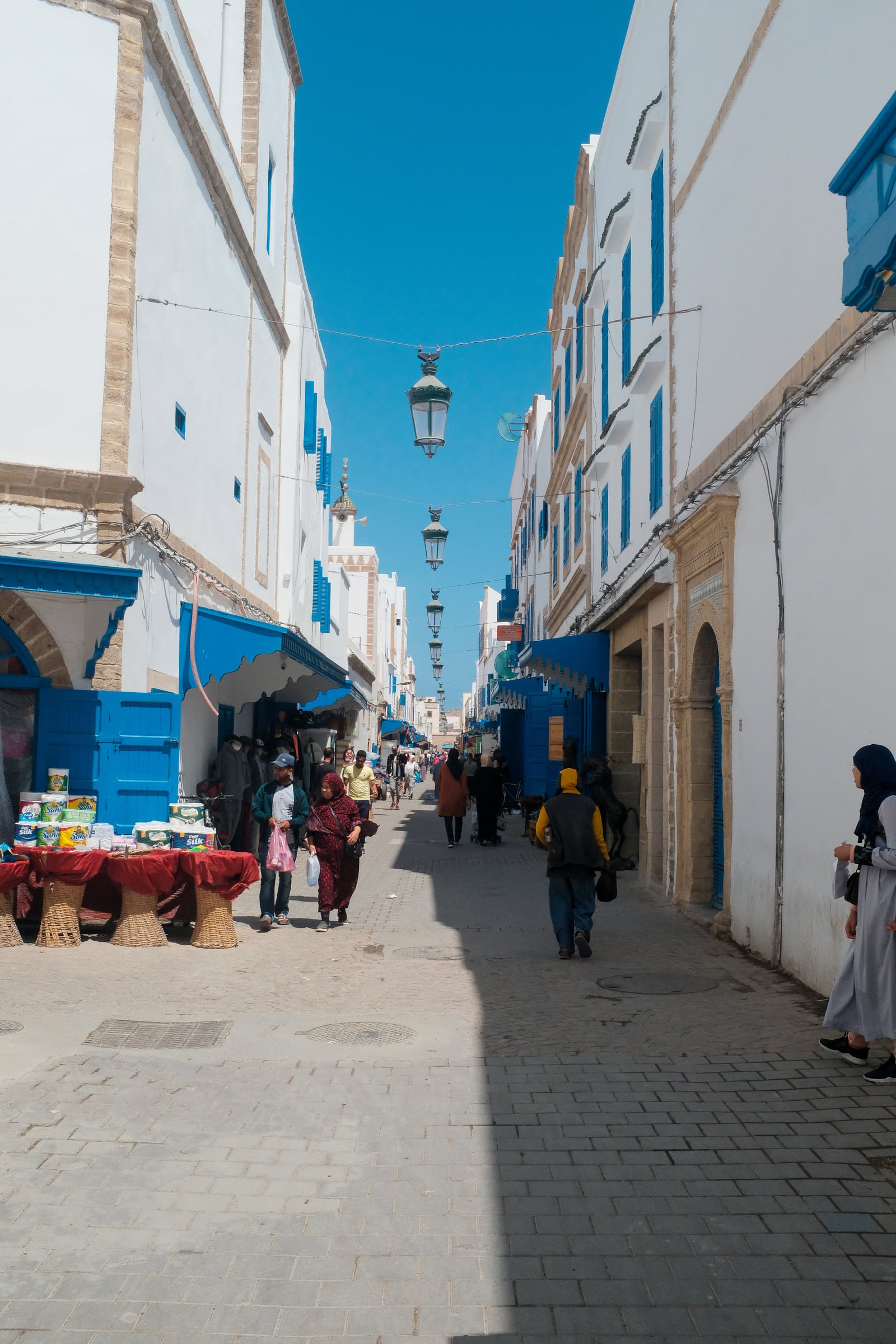
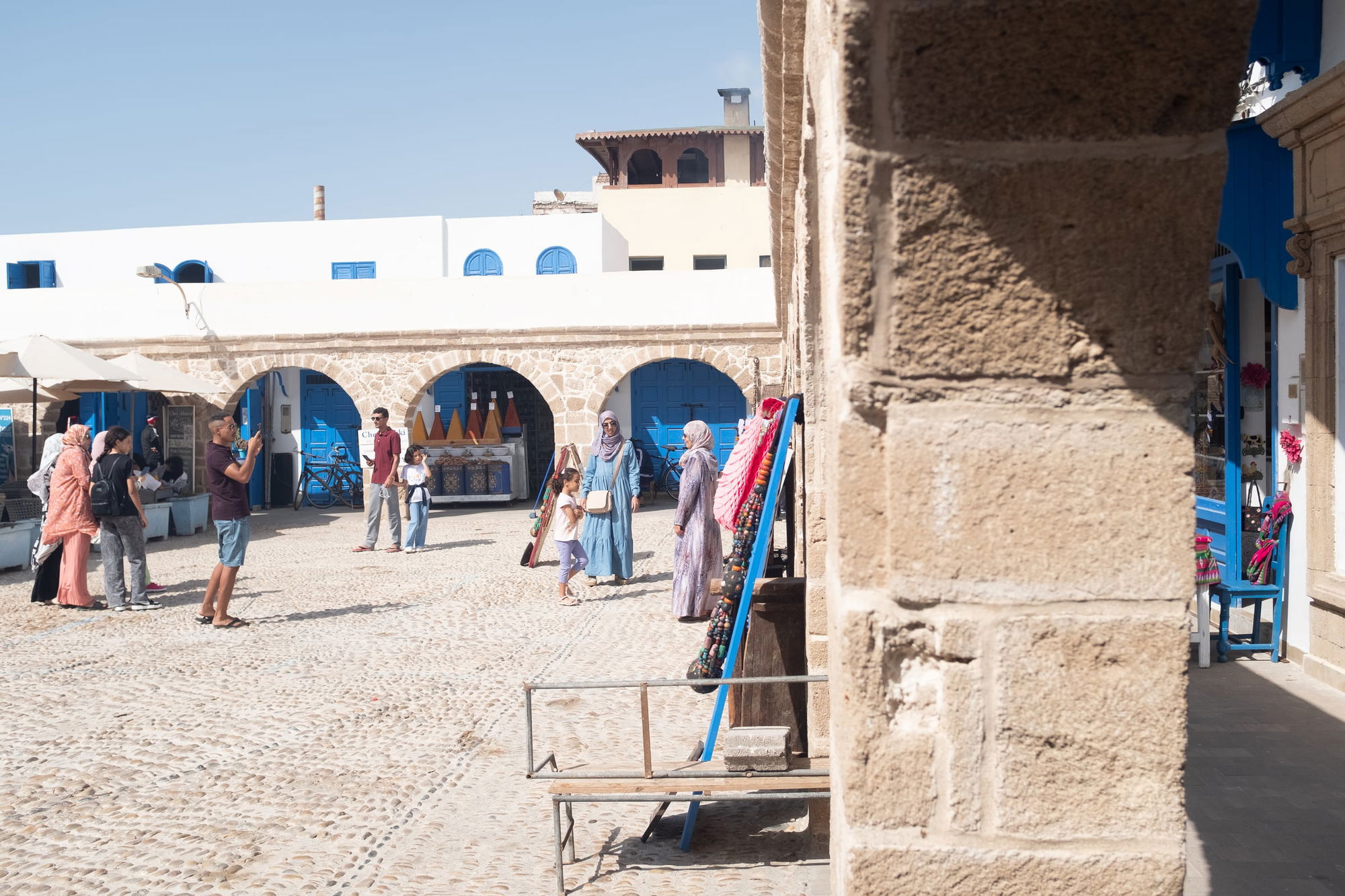
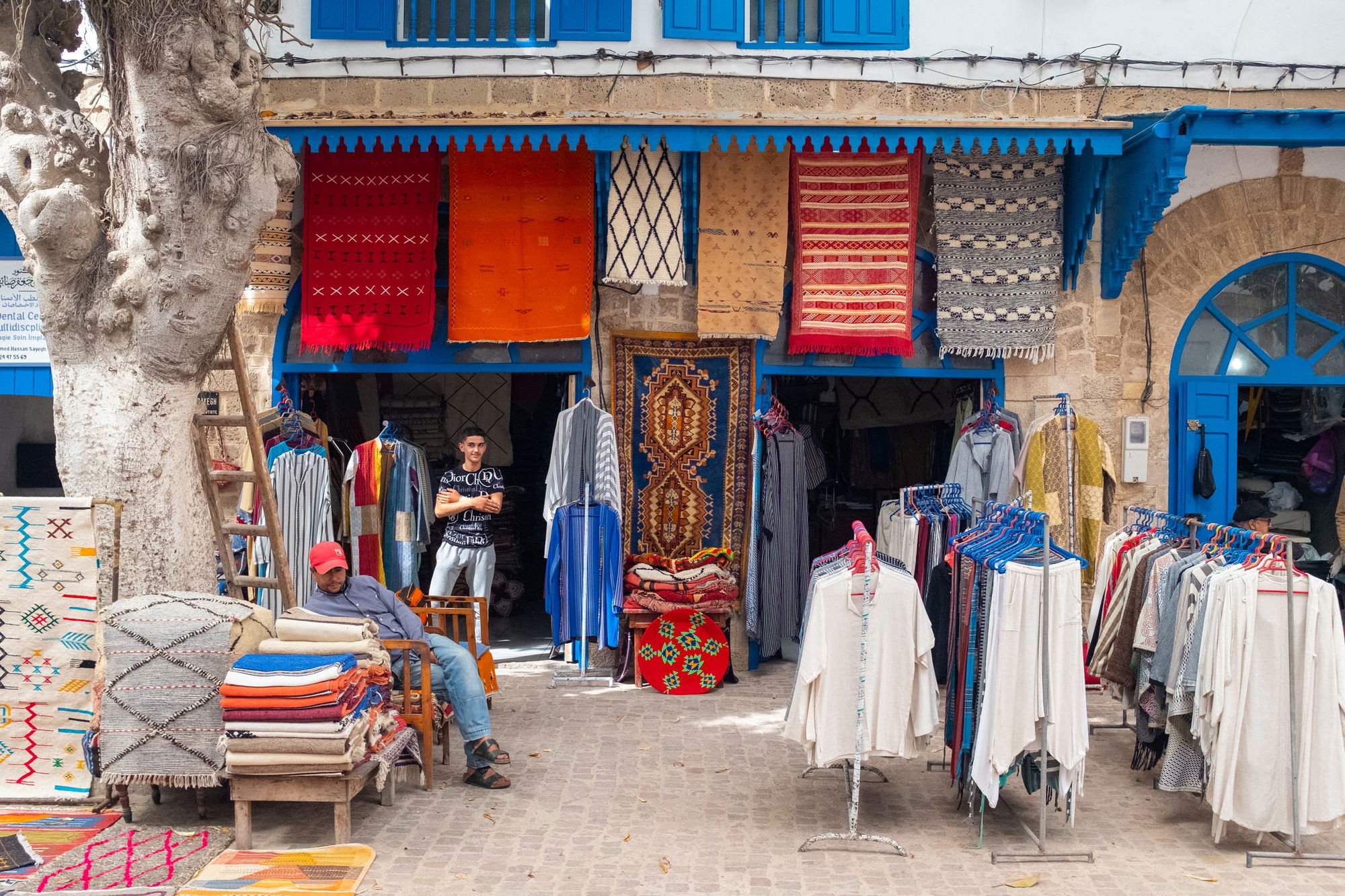
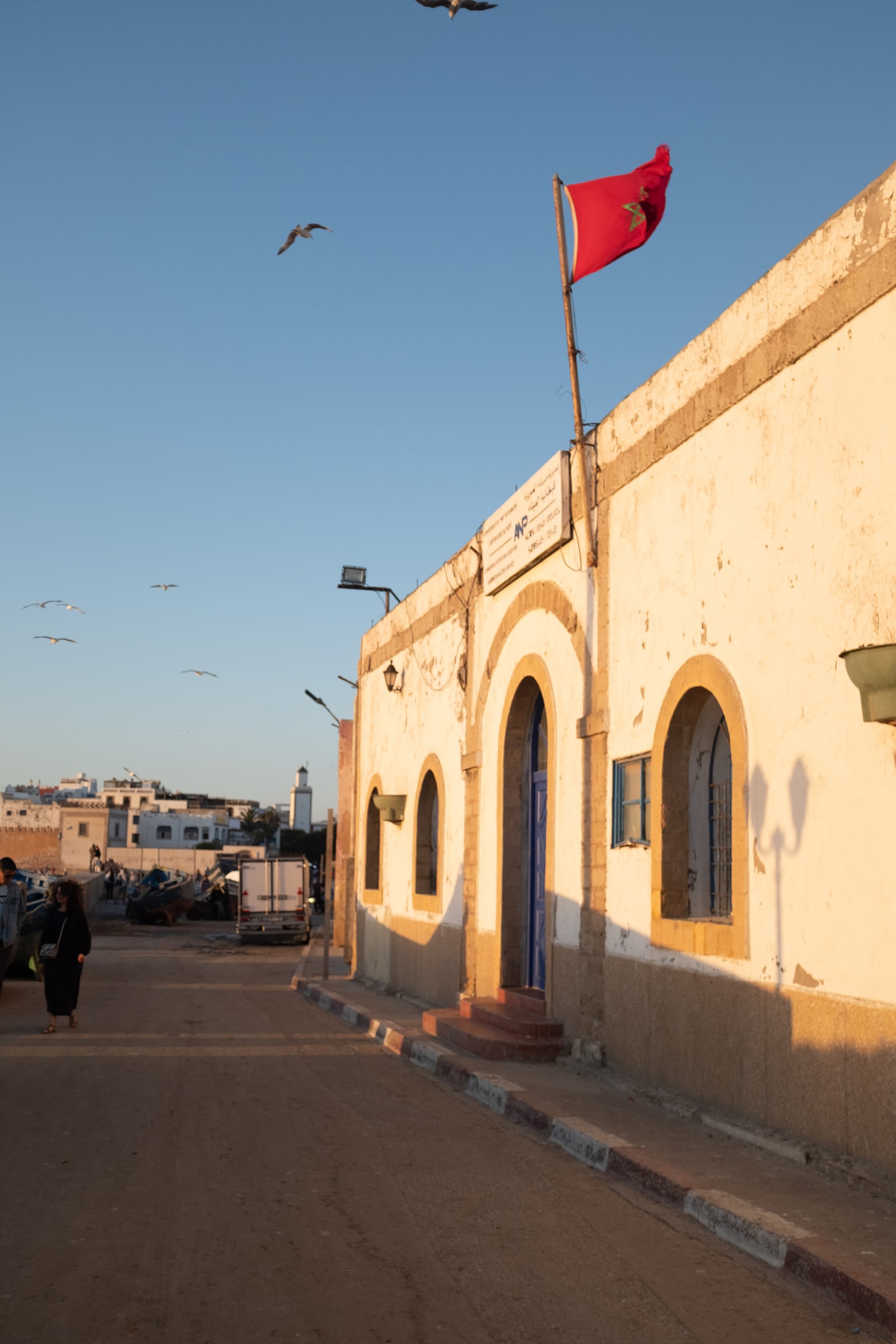
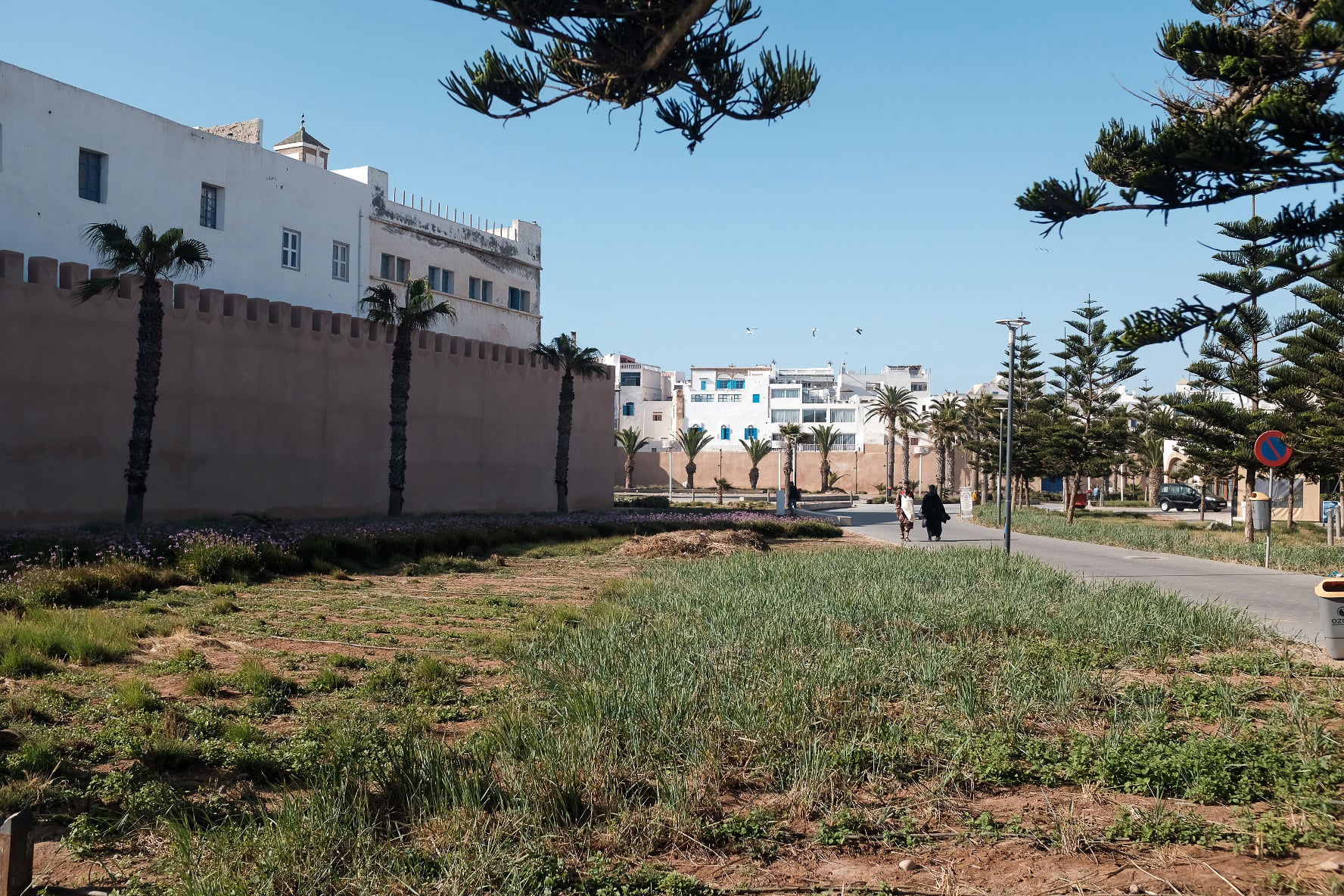
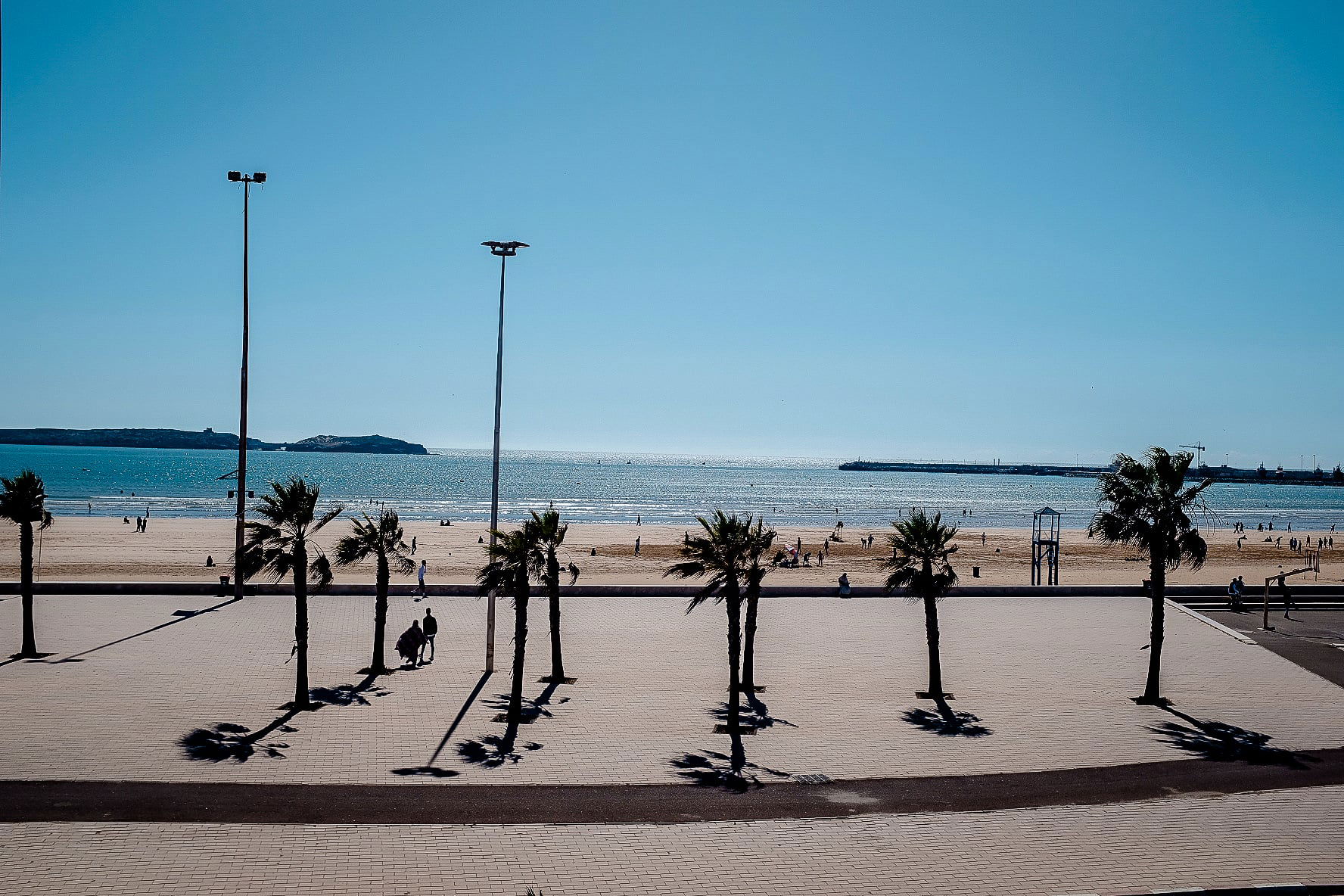
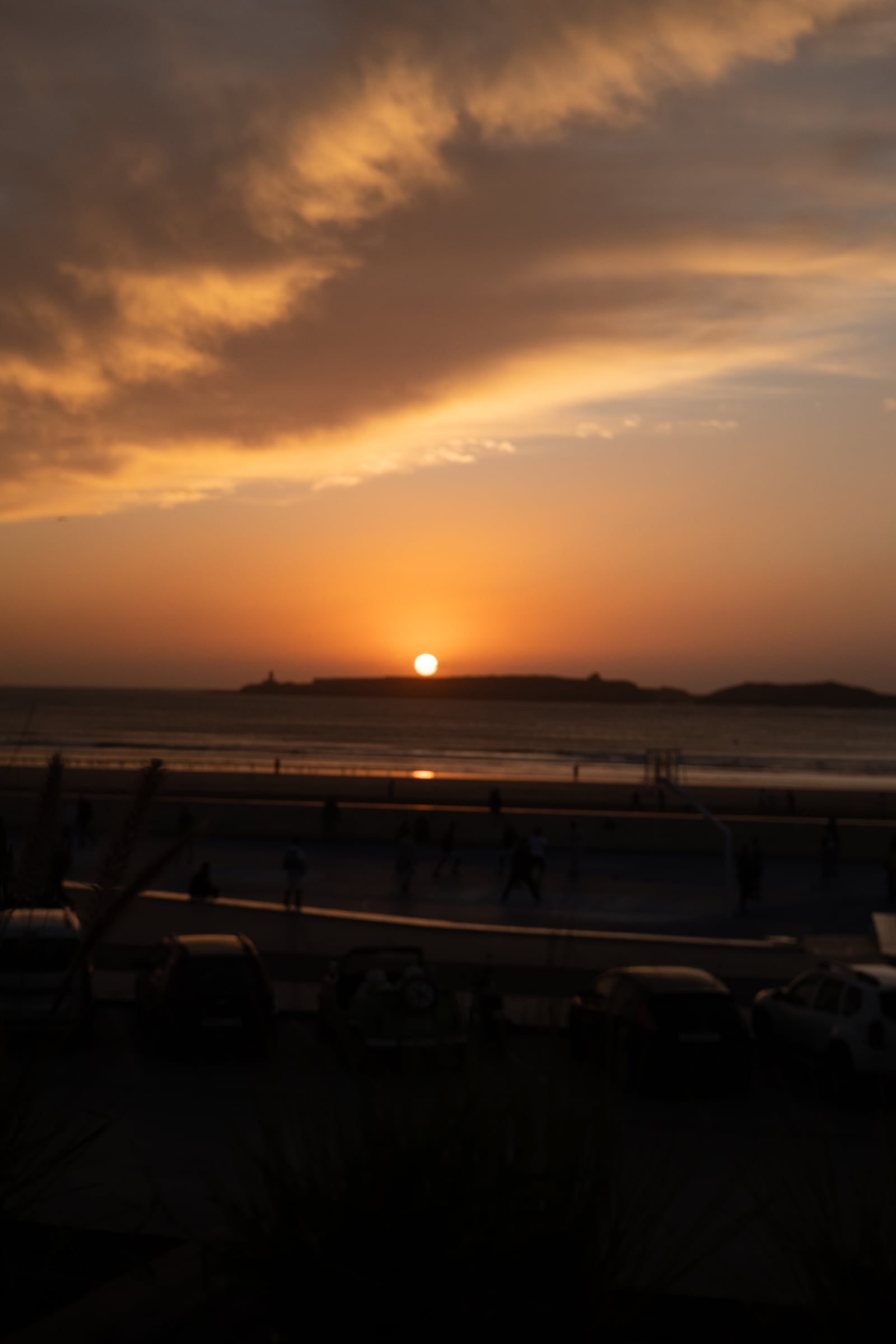
The wind here is constant enough that the town built an identity on it. They call Essaouira the Wind City of Africa, and the alizés keep the beach crowd honest: this is a place for walking the ramparts and watching the kitesurfers work the bay, not for lying still on the sand. The Skala, the sea bastion lined with old bronze cannons, takes the spray on the rough afternoons. Below it the fishing port stays exactly what it is, blue wooden boats, gulls, the morning catch sold a few metres from where it lands.
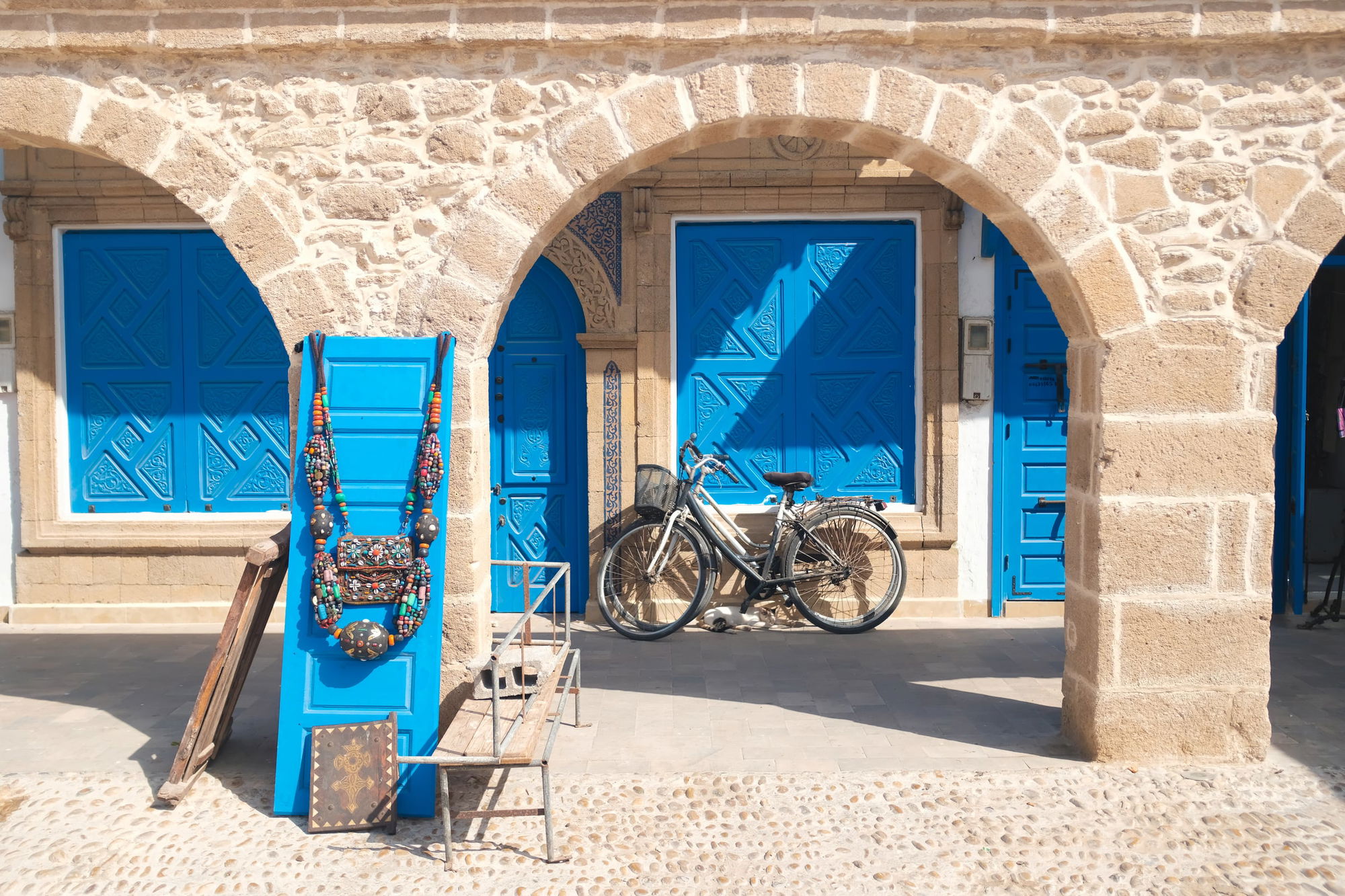
The light is the other reason to come. Atlantic sun hits the white and blue of the walls differently than the desert light hits the ochre of Marrakech, flatter, cooler, easier on the eyes, and it has drawn painters and gallerists for decades. The town carries its Gnaoua music seriously, and in June the Gnaoua and World Music Festival fills the squares. Essaouira is the one coastal town that holds up as a destination in its own right, worth two or three nights rather than a single flight from the heat. When the city overheats, it is the safe answer. It is also the interesting one.
Further south: surf at Taghazout, sea at Agadir
The southern shore changes the question from culture to ocean. Taghazout, a small Berber fishing village nineteen kilometres north of Agadir, has become Morocco's surf capital over a few decades without quite losing the village underneath. The right-hand point break at Anchor Point is the name surfers travel for, but the town runs on something looser than sport: rooftop cafés, yoga at the edge of the day, a slow international crowd that came for a week and stayed longer. It rewards travellers who want the horizon and the rhythm more than the monuments. It is roughly three and a half hours from Marrakech, a touch further than Essaouira, and it makes most sense as a stay rather than a dash.
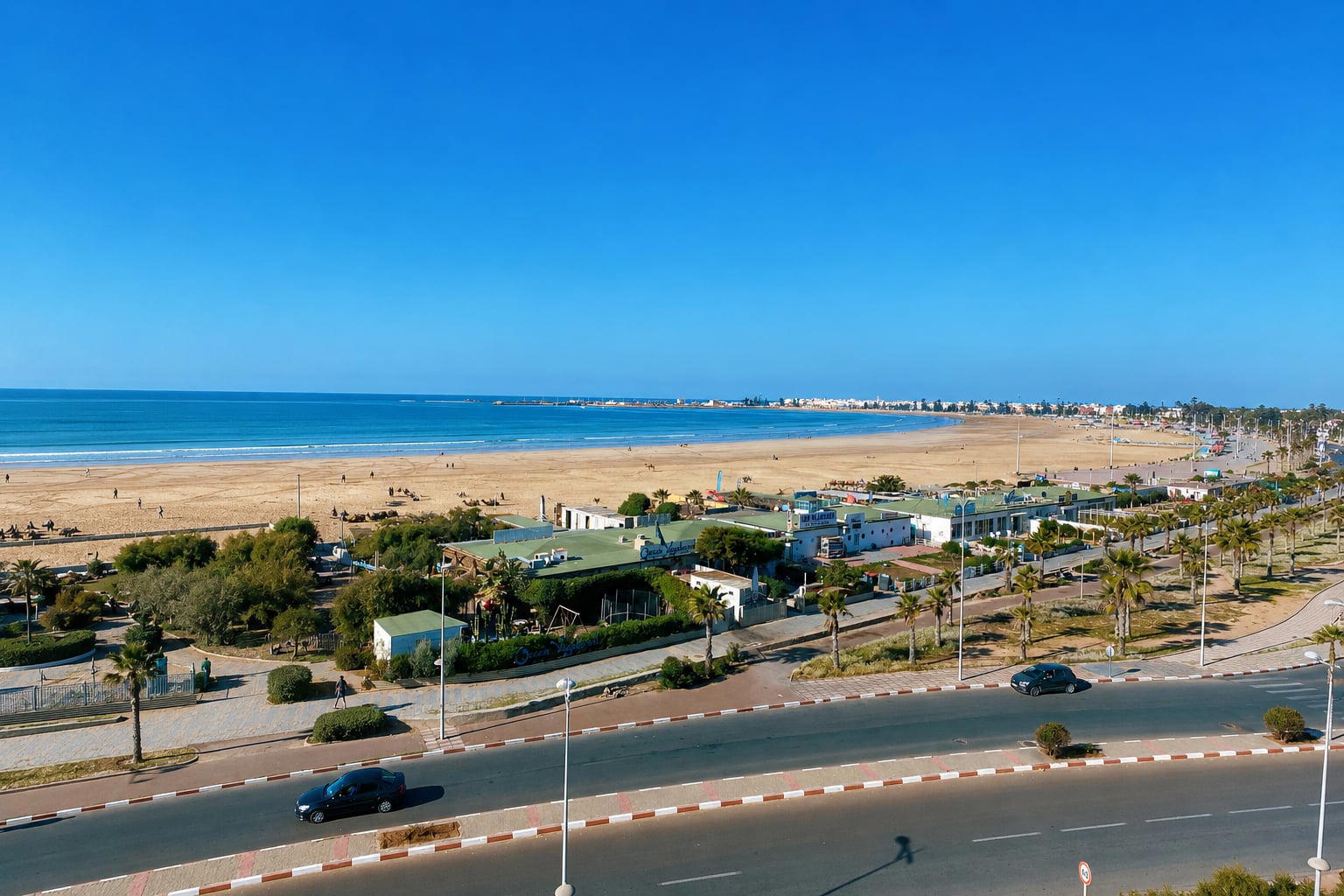
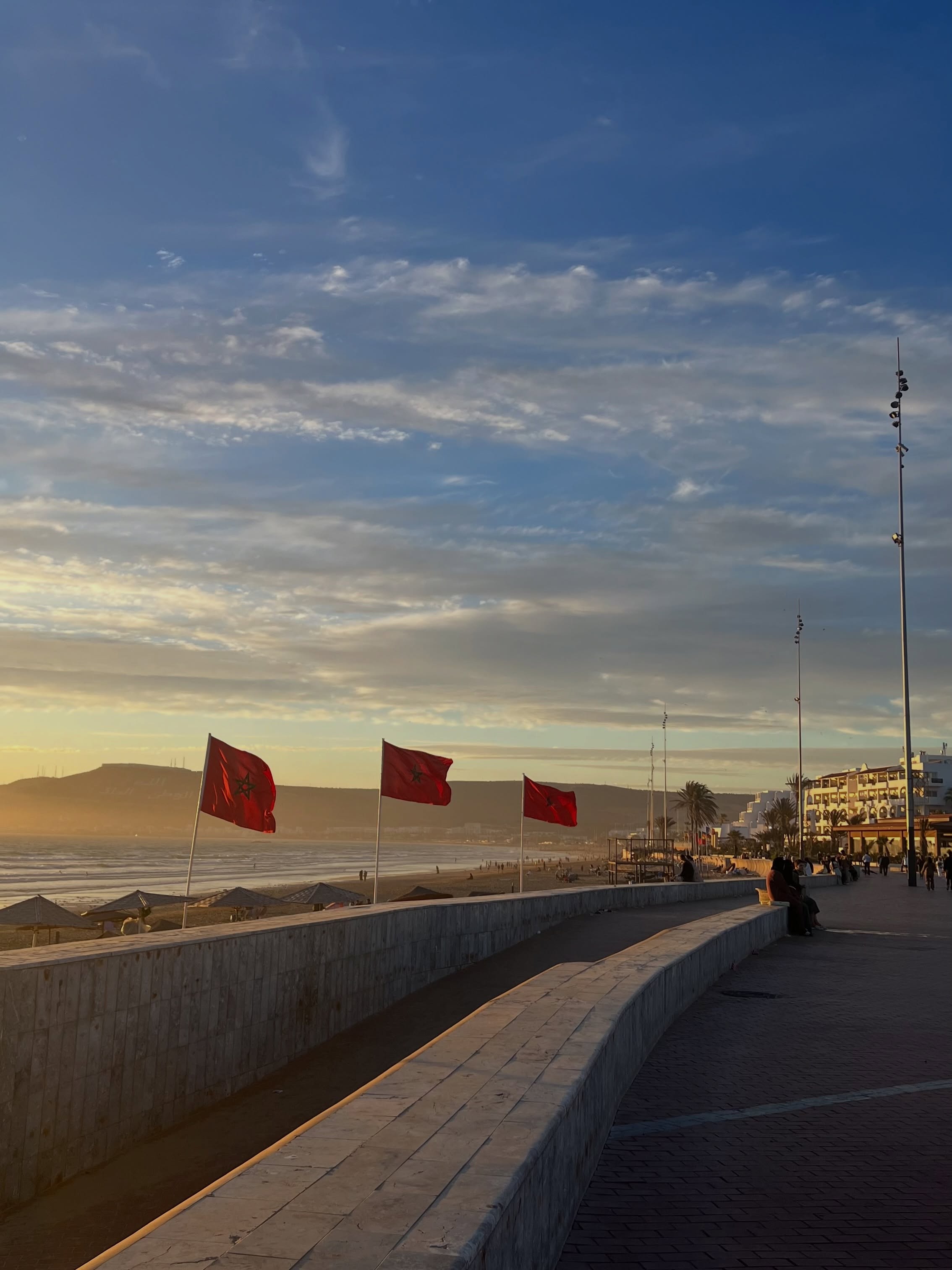
Agadir, just south, is the opposite register, and worth understanding rather than dismissing. The 1960 earthquake levelled the city, which was rebuilt from nothing a little to the south as a modern grid, with planners working in the orbit of Le Corbusier. That history is why it looks like no other Moroccan city: no old medina, wide boulevards, a ten-kilometre beach with a straight promenade behind it. There is little to decode here, which is exactly the point for some travellers. Agadir is for the reliable flat beach, the resort comfort, the family that wants sand and sun without negotiation, and the sea air does its work regardless of the architecture.
If you want less
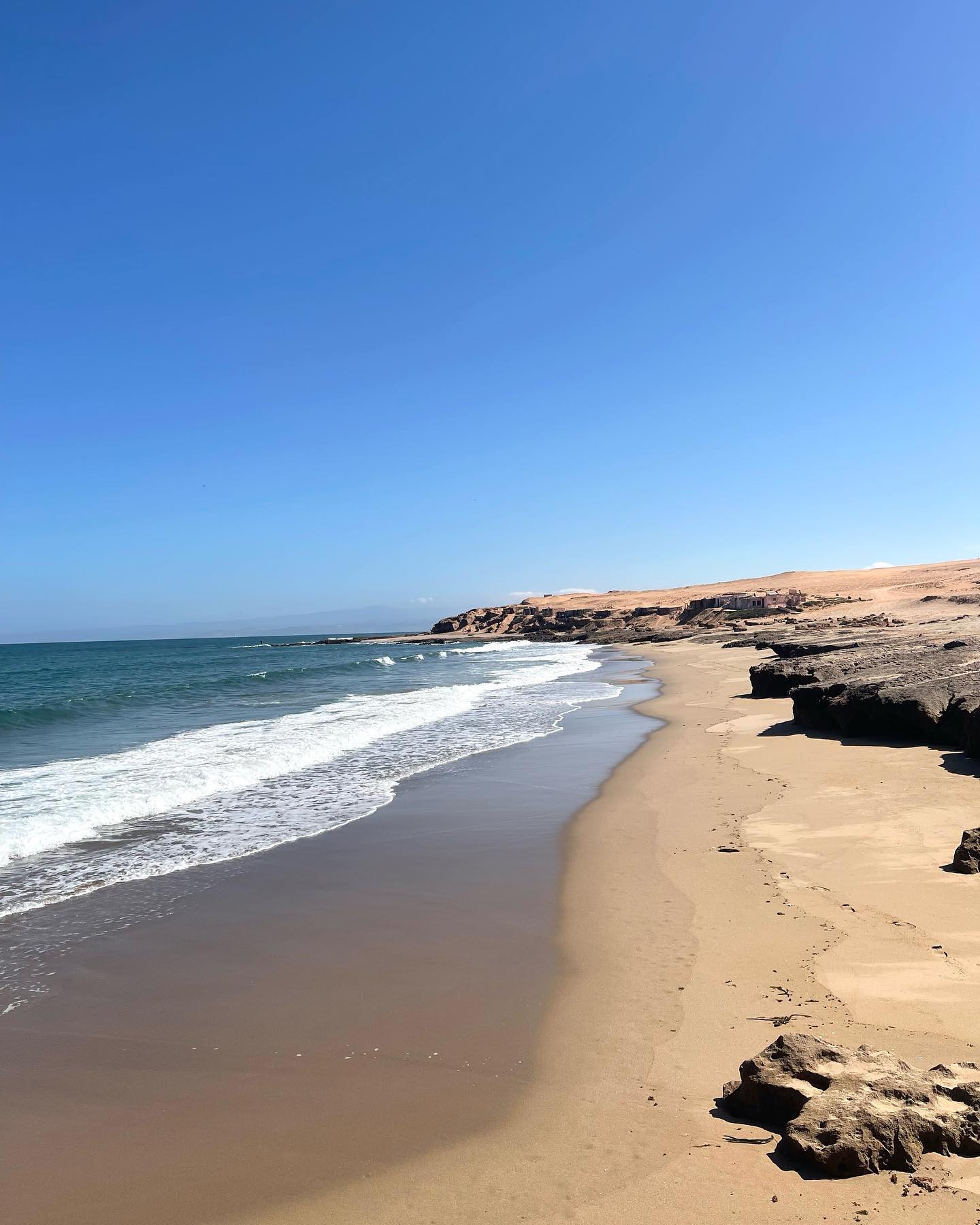
Past the three best-known names, the coast keeps going for anyone who has already done Essaouira and wants quieter ground. Oualidia, two and a half hours northwest, sits on a calm tidal lagoon sheltered from the open Atlantic, and has been Morocco's oyster capital since the French laid the first beds in the 1950s. It is a place for slow lunches, birdlife, and water you can actually swim in without bracing against the wind. Sidi Kaouki, the long windswept beach just south of Essaouira, offers the same coast stripped of almost everything, a marabout, a few guesthouses, and a lot of empty sand for those who find Essaouira itself too busy.
Further up, El Jadida holds the Portuguese fortified city of Mazagan, a UNESCO site since 2004, and its astonishing underground cistern, a low chamber of stone columns and still water that has outlived every reason it was built. These are not heat-escape reflexes. They are reasons to come back to the coast on purpose.
The city teaches you to manage the heat. The Atlantic simply removes it, and hands back the light, the wind, and the sound of water instead. For the inland version of the same instinct, the Agafay and the Atlas foothills cool the evening without the drive to the sea. But there are days in August when only the ocean will do, and on those days the road west is the most useful thing the city offers.
You may also like…